
EN




Demystifying Options Trading
Demystifying Options Trading
Demystifying Options Trading
A Path to Financial Empowerment
Turn market complexity into consistent income through disciplined, risk-managed strategies. Move beyond speculation and take control of your financial future today.
Redefining Options: Moving Beyond Speculation
to Disciplined Wealth Creation
Redefining Options: Moving Beyond Speculation
to Disciplined Wealth Creation
Redefining Options: Moving Beyond Speculation
to Disciplined Wealth Creation
For decades, a cloud of mystery and caution has shrouded the world of options trading, often dismissed by mainstream financial narratives as a high-stakes gamble reserved for only the most seasoned Wall Street professionals. This perception, while rooted in a genuine concern for investor protection, has inadvertently steered many away from a powerful financial instrument that, when wielded with knowledge and discipline, can unlock significant opportunities for wealth creation and recurring income. This article seeks to demystify options trading, moving beyond the stigma to reveal how a diligent and educated approach can transform this supposedly "high-risk" activity into a safe and strategic component of your financial future.
It is true that options are complex financial instruments, and their misuse can lead to substantial losses. However, the risk often lies not in the tool itself, but in the hands of the user. By understanding the fundamentals, embracing rigorous risk management, and employing proven strategies, individuals can learn to navigate the options market with confidence, turning perceived risks into calculated opportunities.
For decades, a cloud of mystery and caution has shrouded the world of options trading, often dismissed by mainstream financial narratives as a high-stakes gamble reserved for only the most seasoned Wall Street professionals. This perception, while rooted in a genuine concern for investor protection, has inadvertently steered many away from a powerful financial instrument that, when wielded with knowledge and discipline, can unlock significant opportunities for wealth creation and recurring income. This article seeks to demystify options trading, moving beyond the stigma to reveal how a diligent and educated approach can transform this supposedly "high-risk" activity into a safe and strategic component of your financial future.
It is true that options are complex financial instruments, and their misuse can lead to substantial losses. However, the risk often lies not in the tool itself, but in the hands of the user. By understanding the fundamentals, embracing rigorous risk management, and employing proven strategies, individuals can learn to navigate the options market with confidence, turning perceived risks into calculated opportunities.

A Primer for the Modern Investor
A Primer for the Modern Investor
What Are Options?
What Are Options?
At its core, an option is a contract that gives its buyer the right, but not the obligation, to buy or sell an underlying asset—such as a stock for example—at a predetermined price, known as the strike price, on or before a specific date, called the expiration date. For this right, the buyer pays a premium to the seller (or "writer") of the option. Think of it like a coupon for a stock: you pay a small fee for the right to buy the stock (or in our case an index such S&P500) at a discounted price later, but you're not forced to use the coupon if the deal no longer makes sense.
At its core, an option is a contract that gives its buyer the right, but not the obligation, to buy or sell an underlying asset—such as a stock for example—at a predetermined price, known as the strike price, on or before a specific date, called the expiration date. For this right, the buyer pays a premium to the seller (or "writer") of the option. Think of it like a coupon for a stock: you pay a small fee for the right to buy the stock (or in our case an index such S&P500) at a discounted price later, but you're not forced to use the coupon if the deal no longer makes sense.
There are two basic types of options:
There are two basic types of options:
Call Options: Give the holder the right to buy the underlying asset.
Put Options: Give the holder the right to sell the underlying asset.
This simple framework provides incredible flexibility. As we will explore, options can be used not just for speculative bets on a stock or index’s direction, but also for generating income, protecting existing investments, and even purchasing stocks at a discount.
Call Options: Give the holder the right to buy the underlying asset.
Put Options: Give the holder the right to sell the underlying asset.
This simple framework provides incredible flexibility. As we will explore, options can be used not just for speculative bets on a stock or index’s direction, but also for generating income, protecting existing investments, and even purchasing stocks at a discount.
Beyond the Stigma:
Why Options Are Labeled "High-Risk"
Beyond the Stigma:
Why Options Are Labeled "High-Risk"
Beyond the Stigma: Why Options Are Labeled "High-Risk"
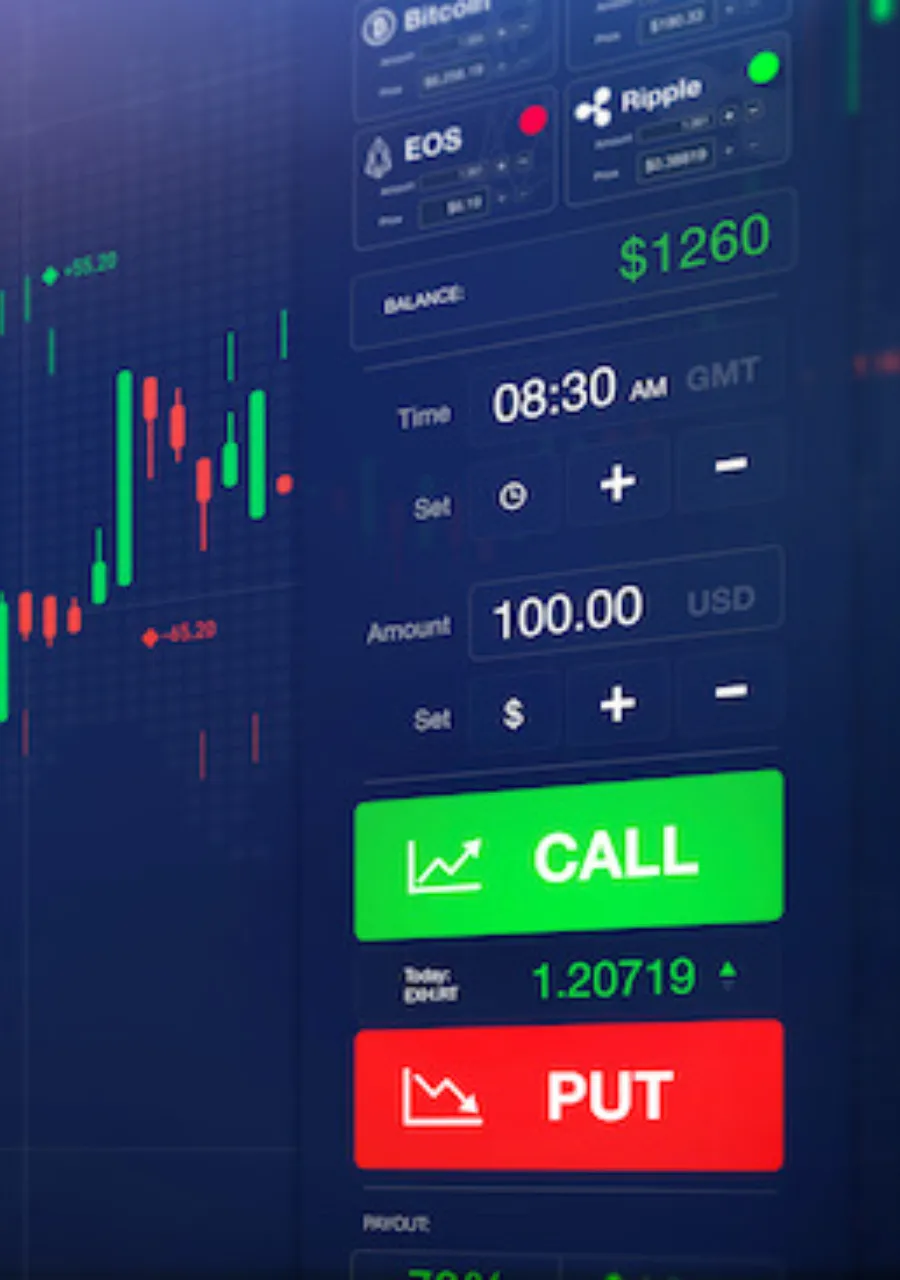
The reputation of options as a dangerous pursuit is not entirely unfounded and stems from legitimate concerns held by regulatory bodies like the Securities and Exchange Commission (SEC) and the Financial Industry Regulatory Authority (FINRA). These organizations have a mandate to protect retail investors, and they rightly worry that individuals may engage in complex trades without fully grasping the potential consequences.
"The number of accounts trading in complex products and options has increased significantly in recent years," FINRA noted in a 2022 regulatory notice. "However, important regulatory concerns arise when investors trade complex products without understanding their unique characteristics and risks".
The primary danger arises from the potential for unlimited losses, particularly when selling or writing options without owning the underlying asset (a practice known as "naked" selling). While an option buyer's risk is capped at the premium they paid, a naked option seller's risk can be theoretically infinite. It is this scenario that financial institutions and regulators often highlight, leading to stringent approval processes for brokerage accounts wishing to trade options.
However, it is crucial to distinguish between the inherent risks of certain advanced strategies and the controlled, defined-risk nature of many other options strategies that are perfectly suitable for educated investors.
The reputation of options as a dangerous pursuit is not entirely unfounded and stems from legitimate concerns held by regulatory bodies like the Securities and Exchange Commission (SEC) and the Financial Industry Regulatory Authority (FINRA). These organizations have a mandate to protect retail investors, and they rightly worry that individuals may engage in complex trades without fully grasping the potential consequences.
"The number of accounts trading in complex products and options has increased significantly in recent years," FINRA noted in a 2022 regulatory notice. "However, important regulatory concerns arise when investors trade complex products without understanding their unique characteristics and risks".
The primary danger arises from the potential for unlimited losses, particularly when selling or writing options without owning the underlying asset (a practice known as "naked" selling). While an option buyer's risk is capped at the premium they paid, a naked option seller's risk can be theoretically infinite. It is this scenario that financial institutions and regulators often highlight, leading to stringent approval processes for brokerage accounts wishing to trade options.
However, it is crucial to distinguish between the inherent risks of certain advanced strategies and the controlled, defined-risk nature of many other options strategies that are perfectly suitable for educated investors.

The Highly Regulated Options Market:
A Foundation of Trust and Safety
The Highly Regulated Options Market:
A Foundation of Trust and Safety
The Highly Regulated Options Market: A Foundation of Trust and Safety
A critical fact often overlooked in discussions about options trading is that the U.S. options market is one of the most heavily regulated financial markets in the world. Far from being a "Wild West" of uncontrolled speculation, the options market operates under multiple layers of sophisticated oversight, stringent controls, and comprehensive safeguards designed to protect both retail investors and institutions while ensuring market integrity and liquidity.
A critical fact often overlooked in discussions about options trading is that the U.S. options market is one of the most heavily regulated financial markets in the world. Far from being a "Wild West" of uncontrolled speculation, the options market operates under multiple layers of sophisticated oversight, stringent controls, and comprehensive safeguards designed to protect both retail investors and institutions while ensuring market integrity and liquidity.
The Regulatory Framework
The Regulatory Framework
The Regulatory Framework
Ensuring Fairness and Transparency Since 1934
Ensuring Fairness and Transparency Since 1934
The SEC: The Foundation of Market Integrity
The SEC: The Foundation of Market Integrity
The U.S. options market operates under the jurisdiction of several powerful regulatory bodies... The SEC establishes comprehensive regulations ensuring fair practices and complete transparency across securities markets.
The U.S. options market operates under the jurisdiction of several powerful regulatory bodies... The SEC establishes comprehensive regulations ensuring fair practices and complete transparency across securities markets.
Rigorous Standards for Broker-Dealer Reliability
Rigorous Standards for Broker-Dealer Reliability
FINRA: Protecting the Individual Investor
FINRA: Protecting the Individual Investor
The Financial Industry Regulatory Authority (FINRA) focuses specifically on investor safety... enforcing detailed rules to ensure member firms comply with strict standards and maintain market transparency.
The Financial Industry Regulatory Authority (FINRA) focuses specifically on investor safety... enforcing detailed rules to ensure member firms comply with strict standards and maintain market transparency.

Guaranteeing Every Trade with Centralized Oversight
Guaranteeing Every Trade with Centralized Oversight
The OCC: Your Ultimate Safety Net
The OCC: Your Ultimate Safety Net
The Options Clearing Corporation (OCC) serves as the central counterparty for all standardized options... managing risk and ensuring the integrity of the entire clearing and settlement process.
The Options Clearing Corporation (OCC) serves as the central counterparty for all standardized options... managing risk and ensuring the integrity of the entire clearing and settlement process.
Defending Against Fraud in Derivatives and Futures
Defending Against Fraud in Derivatives and Futures
The CFTC: Oversight Beyond Stocks
The CFTC: Oversight Beyond Stocks
For commodity-based options, the CFTC provides oversight to protect market participants from manipulation... ensuring market integrity through continuous monitoring and whistleblower programs.
For commodity-based options, the CFTC provides oversight to protect market participants from manipulation... ensuring market integrity through continuous monitoring and whistleblower programs.
Comprehensive Safeguards and Controls
Comprehensive Safeguards and Controls
Beyond the Stigma: Why Options Are Labeled "High-Risk"

The regulatory framework governing options trading includes numerous specific controls designed to prevent market abuse and protect market participants. These safeguards operate at multiple levels, creating a robust system of checks and balances.
Position Limits represent one of the most important controls. Every options class has its own position limit—typically ranging from 25,000 to 250,000 contracts—determined by options exchanges based on the number of shares outstanding and trading volume. These limits prevent any single trader from accumulating an excessively large position that could destabilize the market or be used for manipulation. By capping individual positions, regulators ensure that no trader can corner the market or artificially move prices.
Margin Requirements form another critical layer of protection. Under FINRA Rule 4210 and Federal Reserve Board Regulation T, traders must maintain a minimum of 25% equity in their margin accounts at all times. For long options positions, the entire option premium must be deposited as collateral. For short options positions, traders must maintain the notional value of the underlying security plus the premium received as a security deposit. These requirements prevent excessive leverage and ensure that traders have sufficient capital to cover potential losses, protecting both individual traders and the broader financial system.
Suitability Requirements mandate that brokers thoroughly understand each customer's knowledge, experience, financial situation, and investment objectives before approving options trading. Under Regulation Best Interest (Reg BI), brokers must act in the customer's "best interest" and explain the nature of options products, their risks, and potential rewards. This requirement ensures that retail investors are not steered into strategies beyond their comprehension or risk tolerance.
Circuit Breakers and Trading Halts provide automatic safeguards during periods of extreme market stress. Market-wide circuit breakers halt trading at three thresholds—7% (Level 1), 13% (Level 2), and 20% (Level 3) market declines—giving the market a "time out" to regroup and preventing panic-driven cascades. Individual stock halts are triggered by extreme price action and volatility. When a market-wide halt occurs, options trading halts as well, ensuring coordinated market-wide protection.
Disclosure and Transparency Requirements mandate that options markets file comprehensive disclosure documents with the SEC containing general explanatory information about options mechanics, risks, transaction costs, margin requirements, tax consequences, and identification of the options issuer. All options traders receive standardized "Characteristics and Risks of Standardized Options" documents, ensuring that investors have access to critical information before trading.
The regulatory framework governing options trading includes numerous specific controls designed to prevent market abuse and protect market participants. These safeguards operate at multiple levels, creating a robust system of checks and balances.
Position Limits represent one of the most important controls. Every options class has its own position limit—typically ranging from 25,000 to 250,000 contracts—determined by options exchanges based on the number of shares outstanding and trading volume. These limits prevent any single trader from accumulating an excessively large position that could destabilize the market or be used for manipulation. By capping individual positions, regulators ensure that no trader can corner the market or artificially move prices.
Margin Requirements form another critical layer of protection. Under FINRA Rule 4210 and Federal Reserve Board Regulation T, traders must maintain a minimum of 25% equity in their margin accounts at all times. For long options positions, the entire option premium must be deposited as collateral. For short options positions, traders must maintain the notional value of the underlying security plus the premium received as a security deposit. These requirements prevent excessive leverage and ensure that traders have sufficient capital to cover potential losses, protecting both individual traders and the broader financial system.
Suitability Requirements mandate that brokers thoroughly understand each customer's knowledge, experience, financial situation, and investment objectives before approving options trading. Under Regulation Best Interest (Reg BI), brokers must act in the customer's "best interest" and explain the nature of options products, their risks, and potential rewards. This requirement ensures that retail investors are not steered into strategies beyond their comprehension or risk tolerance.
Circuit Breakers and Trading Halts provide automatic safeguards during periods of extreme market stress. Market-wide circuit breakers halt trading at three thresholds—7% (Level 1), 13% (Level 2), and 20% (Level 3) market declines—giving the market a "time out" to regroup and preventing panic-driven cascades. Individual stock halts are triggered by extreme price action and volatility. When a market-wide halt occurs, options trading halts as well, ensuring coordinated market-wide protection.
Disclosure and Transparency Requirements mandate that options markets file comprehensive disclosure documents with the SEC containing general explanatory information about options mechanics, risks, transaction costs, margin requirements, tax consequences, and identification of the options issuer. All options traders receive standardized "Characteristics and Risks of Standardized Options" documents, ensuring that investors have access to critical information before trading.
Market Infrastructure and
Continuous Monitoring
Market Infrastructure and
Continuous Monitoring
The Scale of Regulation

Beyond specific rules and limits, the options market benefits from sophisticated infrastructure designed to ensure its smooth functioning and integrity. The OCC's role as central counterparty guarantees the performance of all contracts, meaning that even if one party to a trade defaults, the other party's position is protected. This guarantee is backed by the OCC's own capital and the clearing fund, which is maintained by all clearing members.
Real-time surveillance systems continuously monitor trading activity to detect manipulation, unusual patterns, or violations of regulations. Automated alerts flag suspicious activity for investigation by compliance teams. Regular stress testing of systems ensures that the market can function even under extreme conditions. Additionally, the regulatory framework includes ongoing updates and amendments—the OCC alone files multiple rule changes annually—ensuring that regulations keep pace with market evolution and emerging risks.
The regulatory framework also mandates exhaustive record keeping and reporting. Brokers must maintain detailed records of all customer accounts, trading activity, compliance with position limits, and margin maintenance. These records are subject to regular audits and compliance checks by FINRA and the SEC. The result is a market where every transaction is documented, traceable, and subject to regulatory review.
Beyond specific rules and limits, the options market benefits from sophisticated infrastructure designed to ensure its smooth functioning and integrity. The OCC's role as central counterparty guarantees the performance of all contracts, meaning that even if one party to a trade defaults, the other party's position is protected. This guarantee is backed by the OCC's own capital and the clearing fund, which is maintained by all clearing members.
Real-time surveillance systems continuously monitor trading activity to detect manipulation, unusual patterns, or violations of regulations. Automated alerts flag suspicious activity for investigation by compliance teams. Regular stress testing of systems ensures that the market can function even under extreme conditions. Additionally, the regulatory framework includes ongoing updates and amendments—the OCC alone files multiple rule changes annually—ensuring that regulations keep pace with market evolution and emerging risks.
The regulatory framework also mandates exhaustive record keeping and reporting. Brokers must maintain detailed records of all customer accounts, trading activity, compliance with position limits, and margin maintenance. These records are subject to regular audits and compliance checks by FINRA and the SEC. The result is a market where every transaction is documented, traceable, and subject to regulatory review.
The Scale of Regulation
The Scale of Regulation
The Scale of Regulation
The scope of regulatory oversight in the options market is staggering. As of 2022, listed options trading volume exceeded 38.6 million contracts per day—representing growth of 30% from 2020 and 100% from 2019 [2]. This enormous volume occurs under the watchful eye of multiple regulatory bodies, with standardized exchanges (including the Cboe Options Exchange, Nasdaq PHLX, NYSE Arca Options, and others) all operating under strict regulatory guidelines. The regulatory rulebooks span hundreds of pages and contain thousands of specific requirements, all designed to ensure fair and orderly markets.
The scope of regulatory oversight in the options market is staggering. As of 2022, listed options trading volume exceeded 38.6 million contracts per day—representing growth of 30% from 2020 and 100% from 2019 [2]. This enormous volume occurs under the watchful eye of multiple regulatory bodies, with standardized exchanges (including the Cboe Options Exchange, Nasdaq PHLX, NYSE Arca Options, and others) all operating under strict regulatory guidelines. The regulatory rulebooks span hundreds of pages and contain thousands of specific requirements, all designed to ensure fair and orderly markets.
The Diligent Investor's Toolkit:
Mastering Risk in Options Trading
The Diligent Investor's Toolkit:
Mastering Risk in Options Trading
The Diligent Investor's Toolkit:
Mastering Risk in Options Trading
Successful options trading is not about eliminating risk, but about managing it intelligently. A disciplined investor builds a framework of rules and techniques to protect their capital and ensure that no single trade can have a catastrophic impact on their portfolio. The table below outlines several foundational risk management practices that, when combined with the regulatory safeguards described above, create a comprehensive system of protection.
Successful options trading is not about eliminating risk, but about managing it intelligently. A disciplined investor builds a framework of rules and techniques to protect their capital and ensure that no single trade can have a catastrophic impact on their portfolio. The table below outlines several foundational risk management practices that, when combined with the regulatory safeguards described above, create a comprehensive system of protection.
Position Sizing
Position Sizing
Allocating a small, fixed percentage of your total portfolio (e.g., 1-5%) to any single trade.
Allocating a small, fixed percentage of your total portfolio (e.g., 1-5%) to any single trade.
Allocating a small, fixed percentage of your total portfolio (e.g., 1-5%) to any single trade.
Why It Matters
Why It Matters
Prevents a single losing trade from wiping out a significant portion of your capital. Works in conjunction with regulatory position limits.
Prevents a single losing trade from wiping out a significant portion of your capital. Works in conjunction with regulatory position limits.
Prevents a single losing trade from wiping out a significant portion of your capital. Works in conjunction with regulatory position limits.
Diversification
Diversification
Spreading investments across different strategies, underlying assets, sectors, and expiration dates.
Spreading investments across different strategies, underlying assets, sectors, and expiration dates.
Spreading investments across different strategies, underlying assets, sectors, and expiration dates.
Why It Matters
Why It Matters
Reduces the impact of poor performance in any single area of your portfolio.
Reduces the impact of poor performance in any single area of your portfolio.
Reduces the impact of poor performance in any single area of your portfolio.
Strategy Selection
Strategy Selection
Choosing strategies with a defined-risk profile, where the maximum possible loss is known upfront.
Choosing strategies with a defined-risk profile, where the maximum possible loss is known upfront.
Choosing strategies with a defined-risk profile, where the maximum possible loss is known upfront.
Why It Matters
Why It Matters
Caps potential losses, providing peace of mind and preventing catastrophic outcomes.
Caps potential losses, providing peace of mind and preventing catastrophic outcomes.
Caps potential losses, providing peace of mind and preventing catastrophic outcomes.
Continuous Learning
Continuous Learning
Dedicating time to education, including paper trading (simulated trading) before committing real capital.
Dedicating time to education, including paper trading (simulated trading) before committing real capital.
Dedicating time to education, including paper trading (simulated trading) before committing real capital.
Why It Matters
Why It Matters
Builds the knowledge and confidence required to make informed decisions and avoid costly mistakes.
Builds the knowledge and confidence required to make informed decisions and avoid costly mistakes.
Builds the knowledge and confidence required to make informed decisions and avoid costly mistakes.
By systematically applying these principles alongside the regulatory safeguards that protect the entire market, you shift from gambling to strategic investing. You begin to operate like a business, managing probabilities and ensuring long-term survival and profitability in the market.
By systematically applying these principles alongside the regulatory safeguards that protect the entire market, you shift from gambling to strategic investing. You begin to operate like a business, managing probabilities and ensuring long-term survival and profitability in the market.
By systematically applying these principles alongside the regulatory safeguards that protect the entire market, you shift from gambling to strategic investing. You begin to operate like a business, managing probabilities and ensuring long-term survival and profitability in the market.
Building Wealth and Recurring Revenue:
Proven Options Strategies
Building Wealth and Recurring Revenue:
Proven Options Strategies
Building Wealth and Recurring Revenue: Proven Options Strategies
Once a solid risk management framework is in place, an investor can begin to explore the income-generating potential of options. Unlike simply buying a stock and hoping its price goes up, certain options strategies allow you to get paid for your willingness to buy or sell a stock at a specific price. This creates a recurring revenue stream from your portfolio.
Here are a few popular and relatively safe strategies for diligent investors:
Once a solid risk management framework is in place, an investor can begin to explore the income-generating potential of options. Unlike simply buying a stock and hoping its price goes up, certain options strategies allow you to get paid for your willingness to buy or sell a stock at a specific price. This creates a recurring revenue stream from your portfolio.
Here are a few popular and relatively safe strategies for diligent investors:
Once a solid risk management framework is in place, an investor can begin to explore the income-generating potential of options. Unlike simply buying a stock and hoping its price goes up, certain options strategies allow you to get paid for your willingness to buy or sell a stock at a specific price. This creates a recurring revenue stream from your portfolio.
Here are a few popular and relatively safe strategies for diligent investors:
Covered Calls
Covered Calls
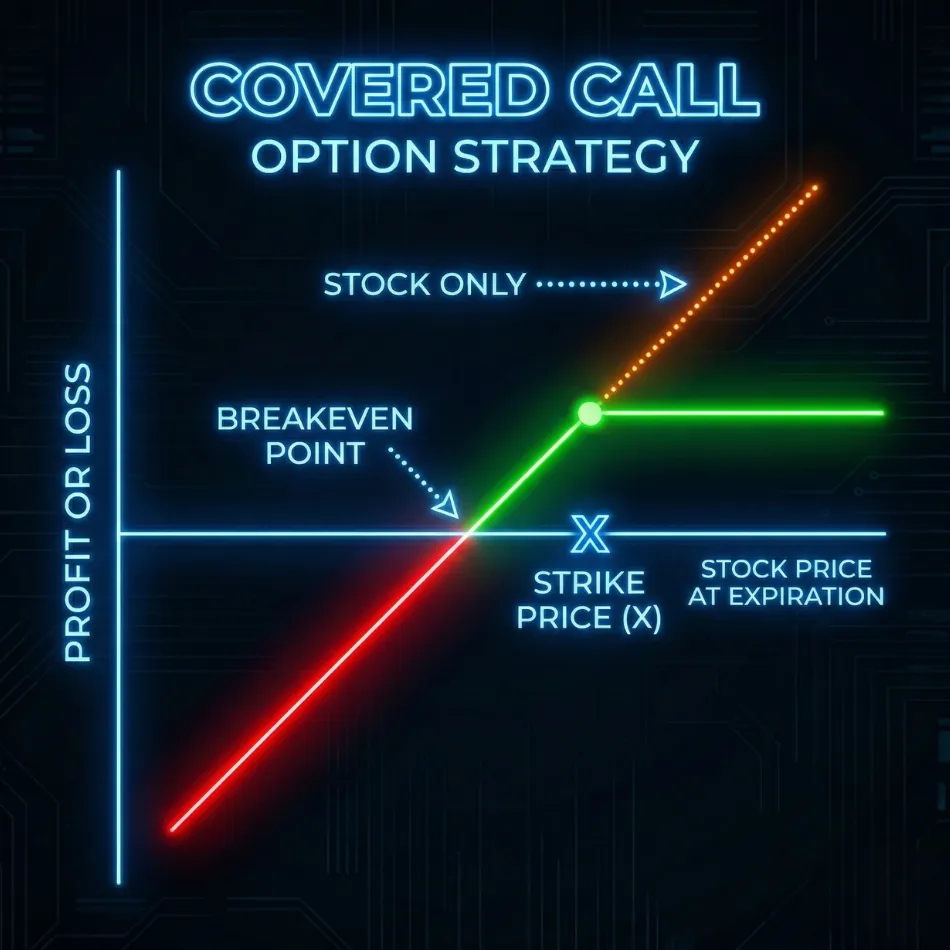
This strategy involves selling a call option on a stock that you already own. You collect the premium as immediate income. If the stock price stays below the strike price, you keep the premium and your shares. If the price rises above the strike, your shares are "called away" and sold at the strike price, but you still keep the premium. It's a way to generate income from stocks you plan to hold long-term.
This strategy involves selling a call option on a stock that you already own. You collect the premium as immediate income. If the stock price stays below the strike price, you keep the premium and your shares. If the price rises above the strike, your shares are "called away" and sold at the strike price, but you still keep the premium. It's a way to generate income from stocks you plan to hold long-term.
This strategy involves selling a call option on a stock that you already own. You collect the premium as immediate income. If the stock price stays below the strike price, you keep the premium and your shares. If the price rises above the strike, your shares are "called away" and sold at the strike price, but you still keep the premium. It's a way to generate income from stocks you plan to hold long-term.
Cash-Secured Puts
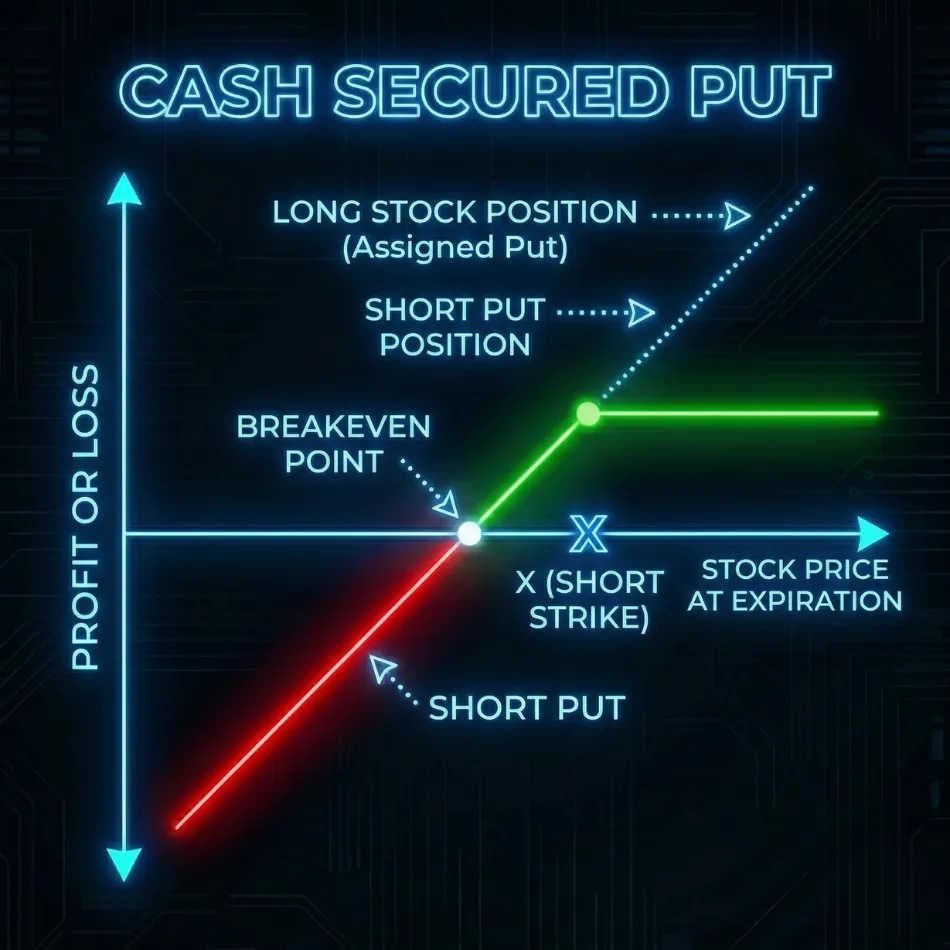
This is a strategy for investors who want to buy a particular stock but believe its current price is too high. You sell a put option at a lower strike price—the price you'd be happy to pay for the stock. You collect a premium for selling this option. If the stock's price stays above the strike, you simply keep the premium. If the price falls below the strike, you are obligated to buy the shares at the strike price, but your effective purchase price is reduced by the premium you received.
This is a strategy for investors who want to buy a particular stock but believe its current price is too high. You sell a put option at a lower strike price—the price you'd be happy to pay for the stock. You collect a premium for selling this option. If the stock's price stays above the strike, you simply keep the premium. If the price falls below the strike, you are obligated to buy the shares at the strike price, but your effective purchase price is reduced by the premium you received.
This is a strategy for investors who want to buy a particular stock but believe its current price is too high. You sell a put option at a lower strike price—the price you'd be happy to pay for the stock. You collect a premium for selling this option. If the stock's price stays above the strike, you simply keep the premium. If the price falls below the strike, you are obligated to buy the shares at the strike price, but your effective purchase price is reduced by the premium you received.
The Wheel Strategy
The Wheel Strategy
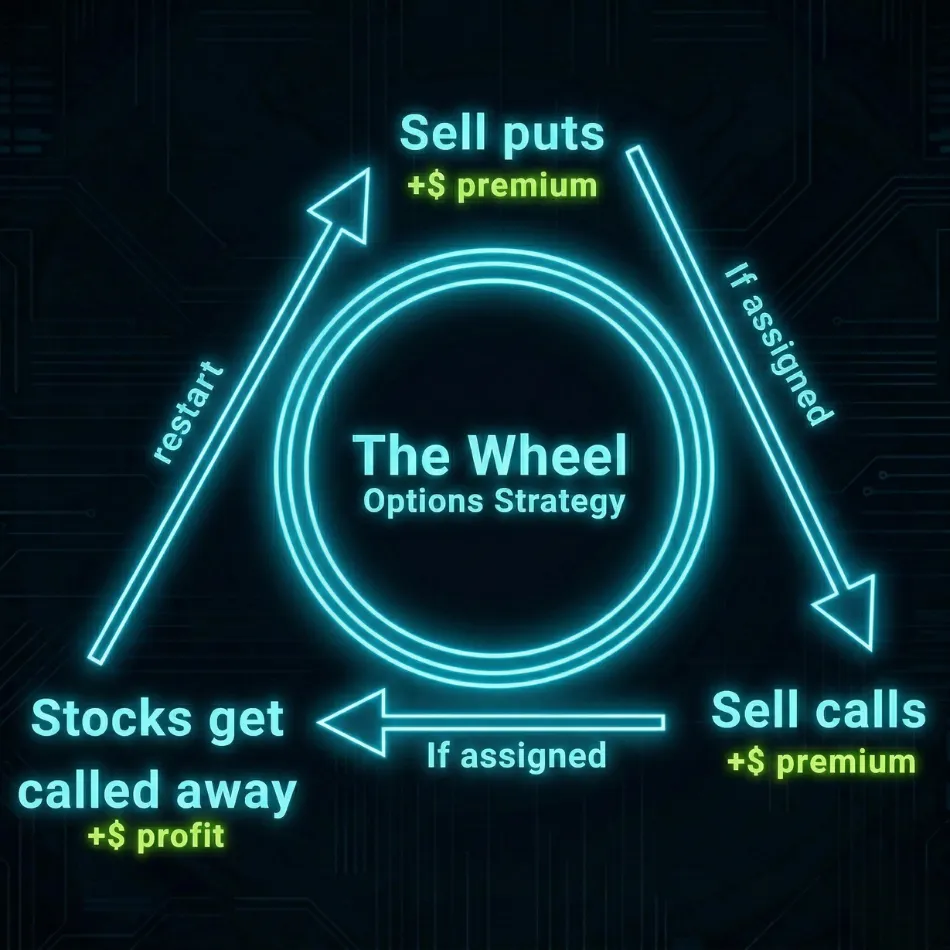
This is a systematic approach that combines cash-secured puts and covered calls. It begins with selling a cash-secured put. If you are assigned the shares, you then begin selling covered calls on those shares. If the shares are eventually called away, you go back to selling cash-secured puts, keeping the "wheel" of income turning.
This is a systematic approach that combines cash-secured puts and covered calls. It begins with selling a cash-secured put. If you are assigned the shares, you then begin selling covered calls on those shares. If the shares are eventually called away, you go back to selling cash-secured puts, keeping the "wheel" of income turning.
This is a systematic approach that combines cash-secured puts and covered calls. It begins with selling a cash-secured put. If you are assigned the shares, you then begin selling covered calls on those shares. If the shares are eventually called away, you go back to selling cash-secured puts, keeping the "wheel" of income turning.
Iron Condors
Iron Condors
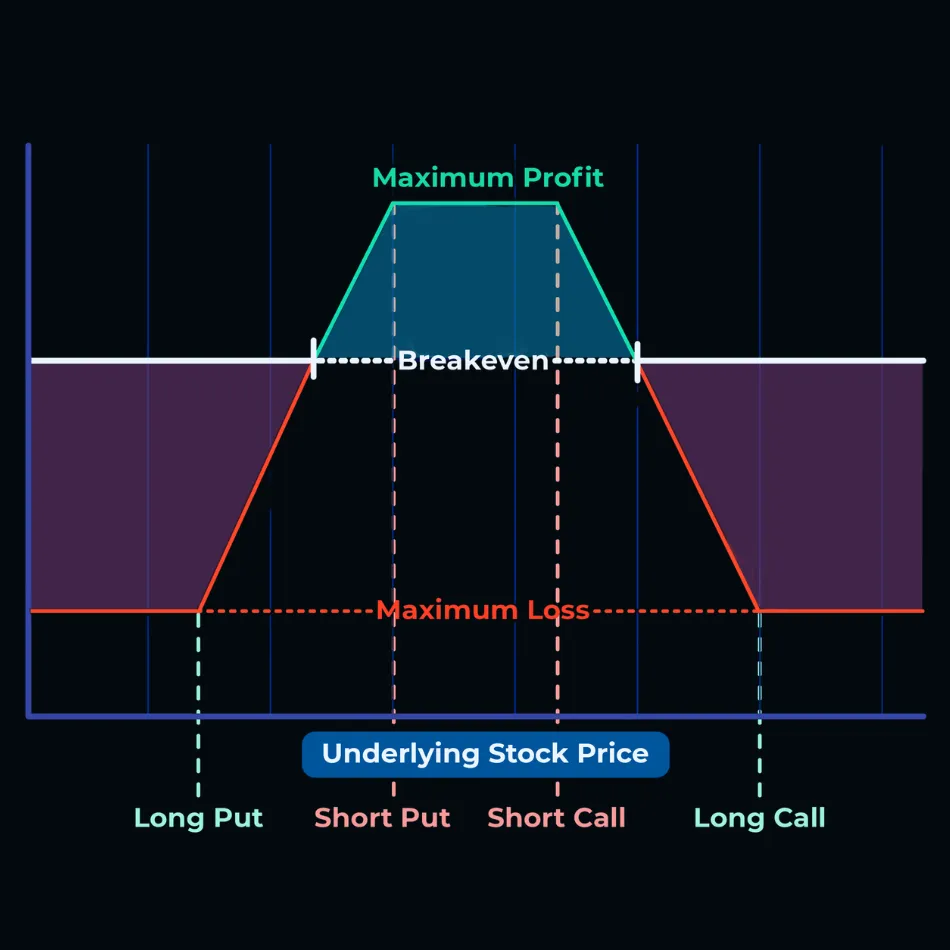
This is a more advanced, but still risk-defined, strategy for profiting from a stock that is trading in a stable, range-bound manner. It involves selling both a put spread and a call spread. The maximum profit is the net premium collected, and the maximum loss is known upfront, making it a high-probability trade in low-volatility environments.
This is a more advanced, but still risk-defined, strategy for profiting from a stock that is trading in a stable, range-bound manner. It involves selling both a put spread and a call spread. The maximum profit is the net premium collected, and the maximum loss is known upfront, making it a high-probability trade in low-volatility environments.
This is a more advanced, but still risk-defined, strategy for profiting from a stock that is trading in a stable, range-bound manner. It involves selling both a put spread and a call spread. The maximum profit is the net premium collected, and the maximum loss is known upfront, making it a high-probability trade in low-volatility environments.
The Path Forward: Your Journey
to Savvy Options Trading
The Path Forward: Your Journey
to Savvy Options Trading
The Path Forward: Your Journey
to Savvy Options Trading
Embarking on the path of options trading requires a commitment to education and a patient, disciplined mindset. It is not a shortcut to riches but a skill that is developed over time. Start by reading books, taking online courses, and following reputable financial educators. Before risking a single dollar, open a paper trading account with your broker and practice executing these strategies. Learn how they behave in different market conditions and get a feel for managing your positions.
By demystifying the process and approaching it with the diligence it deserves, you can strip away the unfair stigma attached to options. You will discover that, far from being a reckless gamble, options trading can be a highly strategic and rewarding endeavor that empowers you to take greater control of your financial destiny. The regulatory framework that governs the options market—with its multiple layers of oversight, position limits, margin requirements, and safeguards—exists precisely to enable educated investors to participate in this market with confidence.
Embarking on the path of options trading requires a commitment to education and a patient, disciplined mindset. It is not a shortcut to riches but a skill that is developed over time. Start by reading books, taking online courses, and following reputable financial educators. Before risking a single dollar, open a paper trading account with your broker and practice executing these strategies. Learn how they behave in different market conditions and get a feel for managing your positions.
By demystifying the process and approaching it with the diligence it deserves, you can strip away the unfair stigma attached to options. You will discover that, far from being a reckless gamble, options trading can be a highly strategic and rewarding endeavor that empowers you to take greater control of your financial destiny. The regulatory framework that governs the options market—with its multiple layers of oversight, position limits, margin requirements, and safeguards—exists precisely to enable educated investors to participate in this market with confidence.
Embarking on the path of options trading requires a commitment to education and a patient, disciplined mindset. It is not a shortcut to riches but a skill that is developed over time. Start by reading books, taking online courses, and following reputable financial educators. Before risking a single dollar, open a paper trading account with your broker and practice executing these strategies. Learn how they behave in different market conditions and get a feel for managing your positions.
By demystifying the process and approaching it with the diligence it deserves, you can strip away the unfair stigma attached to options. You will discover that, far from being a reckless gamble, options trading can be a highly strategic and rewarding endeavor that empowers you to take greater control of your financial destiny. The regulatory framework that governs the options market—with its multiple layers of oversight, position limits, margin requirements, and safeguards—exists precisely to enable educated investors to participate in this market with confidence.


Your Legacy Demands
Your Legacy Demands
A Strategic Allocation.
A Strategic Allocation.
We engineer high-performance solutions across global markets and emerging technologies to secure your financial freedom for generations.
Delta Capital Pro is an SEC-registered investment adviser, focused on the strategic allocation and growth of high net worth assets. We blend deep technological foresight with decades of global corporate expertise to engineer the financial freedom and legacy our exclusive clients deserve.
© 2025 Delta Capital